
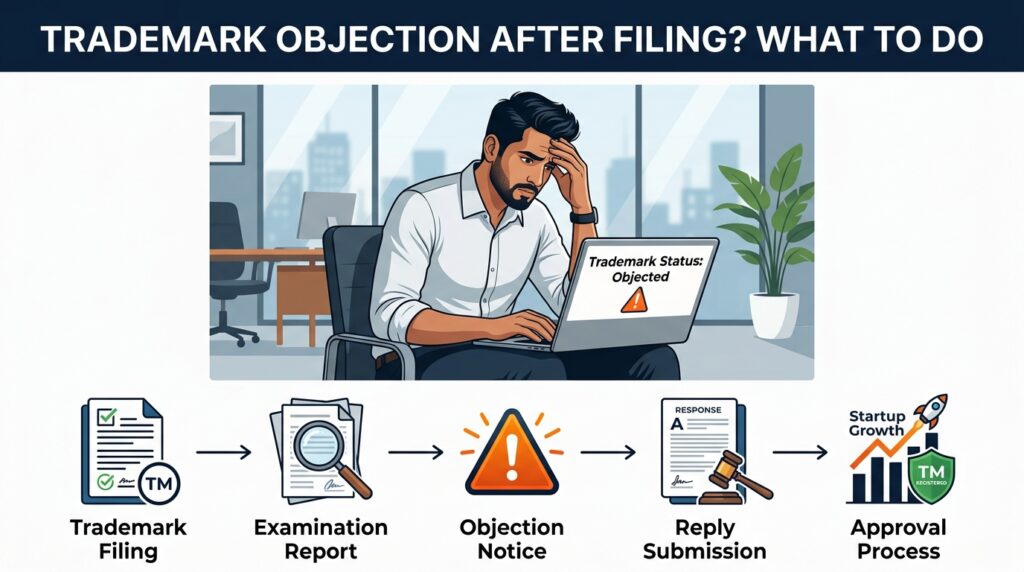
Trademark Objection After Filing? What to Do
Posted on May 27, 2026 by Nitin Rawat
what trademark objection means
Trademark objection after filing usually means the Trademark Registry found an issue in your application related to brand similarity, generic naming, incorrect details, or legal compliance. It does not mean your trademark is permanently rejected. In most cases, businesses can solve the issue through a proper trademark objection reply with supporting explanation and documents.
In This Guide
This guide explains:
- what trademark objection means
- why trademark objection after filing happens
- what trademark status objected means
- how to prepare a trademark objection reply
- common mistakes businesses make
- how startups can avoid trademark rejection
- practical steps after receiving a trademark objection notice
Why Trademark Objection After Filing Happens
Trademark objection after filing is one of the most common situations faced by startups, ecommerce brands, food businesses, agencies, and new business owners in India. Many applicants panic when they receive a trademark objection notice because they believe their brand application has failed permanently.
In reality, trademark objection is often part of the normal trademark examination process.
The Trademark Examiner reviews every application before approval. If the examiner notices similarity, lack of uniqueness, document mismatch, or legal concerns, the department raises a trademark application objection and asks for clarification.
The important thing is not avoiding panic but understanding the exact reason behind the objection.
What Trademark Status Objected Means
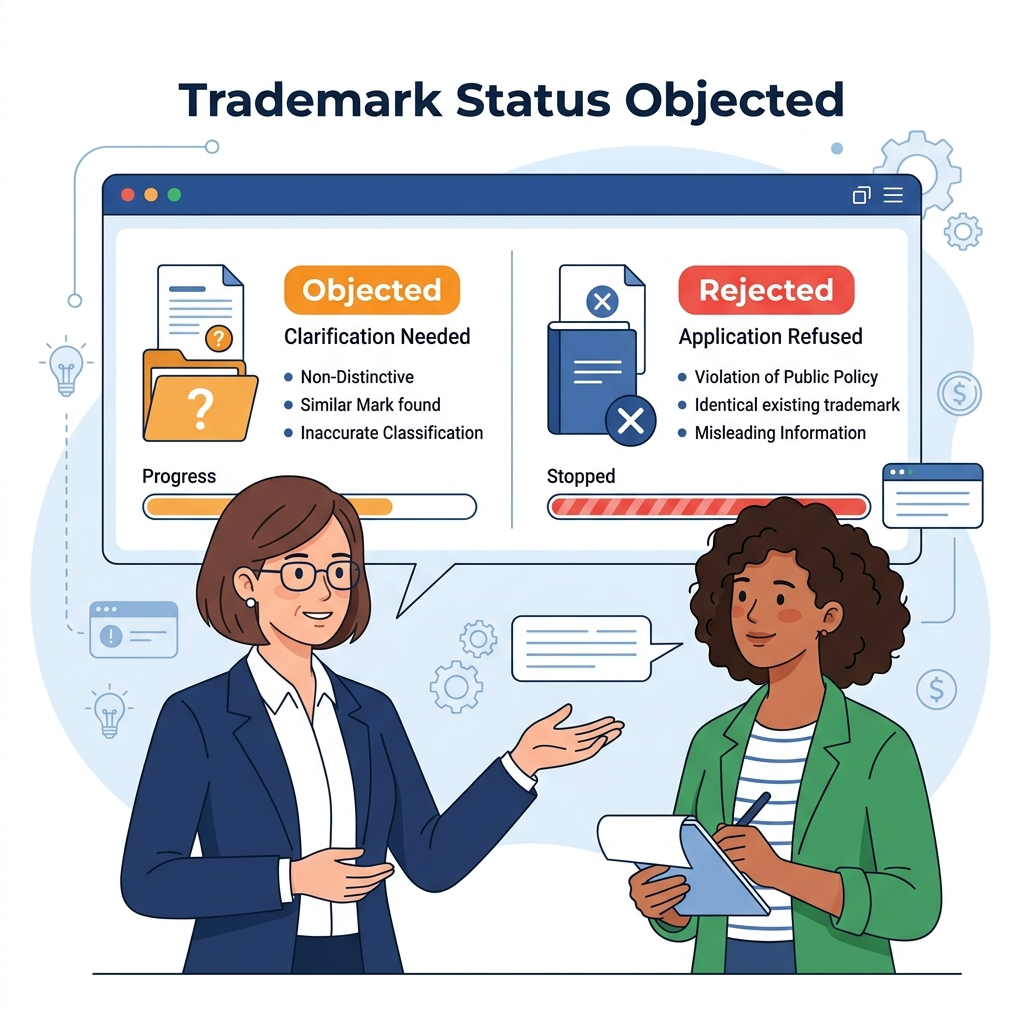
When the application status shows “Objected,” it means the Trademark Registry needs a response from the applicant before moving forward.
It does NOT mean:
- trademark cancelled
- trademark permanently rejected
- business illegal
- application closed immediately
Many successful brands initially receive objections during the examination stage.
Quick Comparison
| Trademark Objection | Trademark Rejection |
| clarification required | application refused |
| reply can solve issue | more serious legal stage |
| temporary examination stage | possible final refusal |
| common for startups | less common |
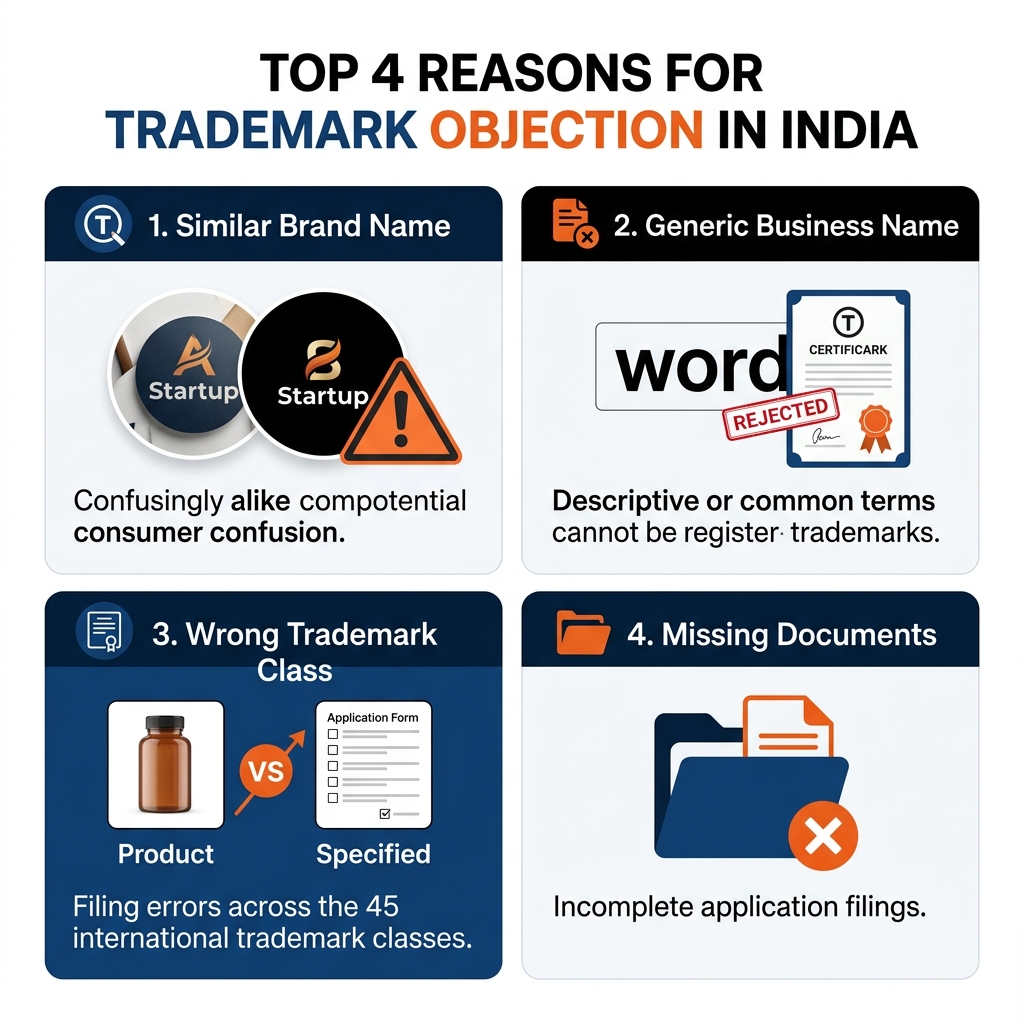
Most Common Reasons for Trademark Objection
Understanding the actual reason behind the trademark objection notice is extremely important before preparing any response.
Similar Trademark Already Exists
This is one of the most common reasons businesses receive examiner objections during trademark review.
Example:
A startup applies for:
- “Foodizo”
But a similar registered brand already exists:
- “Foodiso”
Even small spelling changes may still create similarity concerns if pronunciation sounds similar.
Generic Brand Names
Generic names are difficult to protect legally because they describe the business directly.
Examples:
- Fresh Milk
- Best Fashion
- Fast Delivery
Such names usually face objections under Section 9 because they lack distinctiveness.
Wrong Trademark Class
Many small businesses file applications without understanding trademark classes properly.
Example:
- clothing brand filed in wrong category
- software business filed under unrelated service class
This can create complications during examination.
Incomplete Documents
A trademark objection notice may also happen because of:
- incorrect address proof
- applicant mismatch
- unsigned documents
- wrong business information
Many startups ignore these small details during filing.
Real Situation Most Startups Face
Many ecommerce businesses and Instagram brands file trademark applications quickly after logo creation without checking existing trademarks properly.
Later, they receive:
- trademark status objected
- examination report
- similarity objection
This is extremely common in:
- clothing brands
- cosmetic startups
- food businesses
- ecommerce stores
The problem usually starts because businesses focus on branding creativity but ignore trademark search before filing.
What To Do After Receiving Trademark Objection Notice
Businesses should follow a proper response process instead of sending random internet template replies.
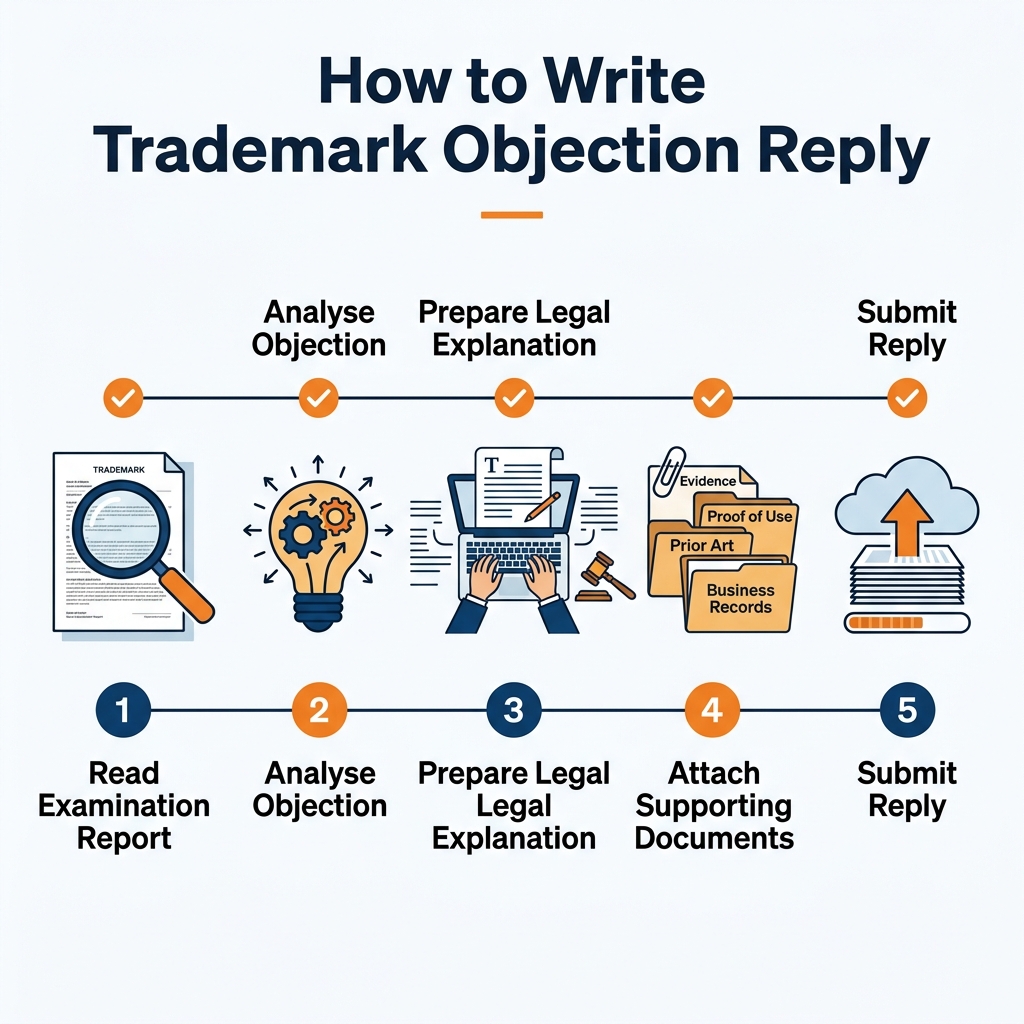
Step 1: Read the Examination Report Carefully
The examination report explains:
- objection reason
- legal section used
- examiner observation
- response timeline
Never reply before understanding the actual issue.
Step 2: Check Similar Trademark Details
If the objection relates to similarity:
- compare spelling
- compare pronunciation
- compare business category
- compare customer audience
Sometimes brands may look similar visually but operate in completely different industries.
Step 3: Prepare Proper Trademark Objection Reply
A professional trademark objection reply should:
- explain uniqueness
- address examiner concern directly
- include legal reasoning
- attach supporting proof
Weak replies often create further delay.
Step 4: Submit Reply Before Deadline
Missing the response deadline can create additional legal and procedural issues.
Businesses should act quickly after receiving the trademark application objection.
How To Write Strong Trademark Objection Reply
A strong response is not about difficult legal English. It is about solving the examiner’s concern clearly and professionally.
Important Elements in Reply
| Reply Section | Purpose |
| application details | identify application |
| objection explanation | answer examiner concern |
| uniqueness argument | explain brand identity |
| supporting proof | establish usage |
| legal clarification | strengthen application |
Documents That Help During Trademark Examination Process
Supporting documents improve trust and strengthen the response.
Useful documents include:
- website screenshots
- Instagram business page
- invoices
- logo usage proof
- advertisements
- domain ownership proof
- packaging photos
These documents help prove genuine business usage.
Common Mistakes Businesses Make
Many businesses damage their own application because of avoidable mistakes during the trademark objection process.
Copy-Paste Internet Replies
Many applicants download random reply formats online without understanding their own objection reason.
Trademark examiners can easily identify generic replies.
Ignoring Similarity Problem
Some businesses refuse to analyse existing trademarks properly.
If similarity genuinely exists, the response must explain:
- visual difference
- pronunciation difference
- business distinction
Ignoring this issue weakens the case.
Filing Trademark Without Search
Many startups spend money on branding first and trademark research later.
This creates:
- objection risk
- legal conflict
- rebranding cost
A proper trademark check before filing helps reduce future problems significantly.
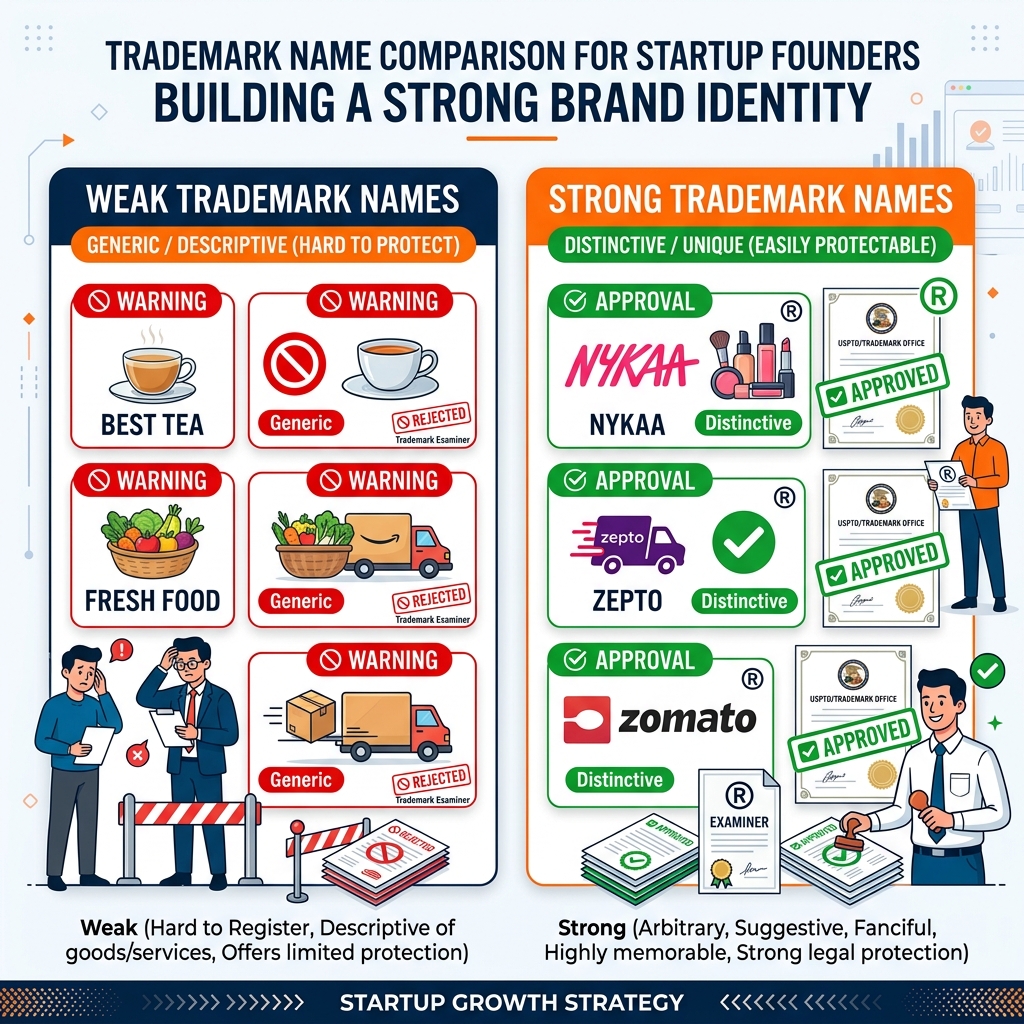
Real Difference Between Weak And Strong Brand Names
Weak Trademark Examples
| Weak Names | Problem |
| Best Tea | generic |
| Fresh Food | descriptive |
| Fast Delivery | common phrase |
Strong Trademark Examples
| Strong Names | Reason |
| Zomato | unique identity |
| Nykaa | invented word |
| Zepto | distinctive branding |
Distinctive brand names usually perform better during examination.
Why Many Trademark Applications Get Rejected
Trademark rejected situations usually happen when:
- strong similarity exists
- reply is weak
- brand lacks uniqueness
- legal conflict remains unresolved
However, many objections can still be resolved before reaching rejection stage.
This is why timely professional guidance matters.
Should Businesses Reply Themselves?
This depends on the objection type.
Simple Cases
Businesses may handle:
- document clarification
- small correction issues
- address mismatch
Complex Cases
Professional help is safer when:
- similarity objection exists
- hearing notice issued
- legal arguments required
- multiple objections raised
Most Businesses Ignore This Important Point
Trademark registration is not just a legal formality.
It protects:
- business identity
- future branding
- ecommerce credibility
- customer trust
- long-term growth
Without protection, competitors may:
- copy brand identity
- create customer confusion
- misuse business reputation
This is why trademark protection matters more for startups today than ever before.
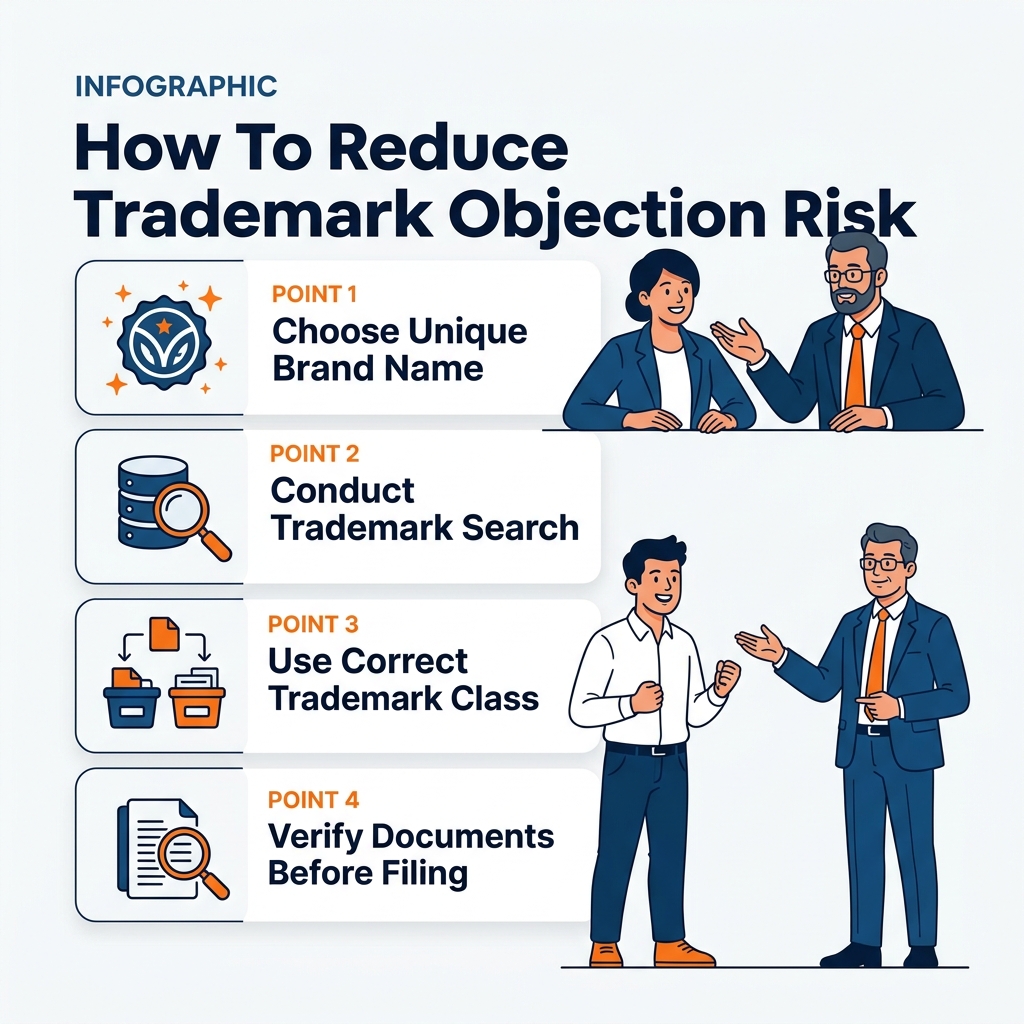
How To Reduce Trademark Objection Risk
Businesses can lower future objection risk through proper planning.
Choose Unique Brand Names
Avoid overly descriptive names.
Invented or creative names usually face fewer objections.
Conduct Trademark Search Before Filing
Search for:
- spelling similarity
- pronunciation similarity
- related industry trademarks
This reduces future legal conflict.
Use Correct Trademark Class
Wrong classification creates unnecessary examination complications.
Keep Documents Accurate
Small document mismatches often delay applications.
Always verify:
- applicant name
- address
- mobile number
- business details
before submission.
Frequently Asked Questions
Can trademark objection be removed?
Yes. Many objections are resolved successfully through proper trademark objection reply and supporting documents.
Does trademark objected mean rejection?
No. Trademark status objected means the examiner requested clarification before approval.
How long does trademark objection process take?
The timeline depends on:
- objection complexity
- reply quality
- examiner review
- hearing requirement
Can startups face trademark objection easily?
Yes. New businesses commonly face objections because many startups skip proper trademark search before filing.
Final Thoughts
Receiving an objection notice can feel stressful for many business owners, but it is not the end of the registration process. In many cases, the issue can be resolved successfully through a structured trademark objection reply supported with proper explanation and business proof.
The biggest mistake businesses make is reacting emotionally instead of analysing the actual objection reason carefully. Whether the issue relates to similarity, branding, or documentation, timely action and clear response improve the chances of successful registration.
Businesses should focus on:
- unique branding
- proper trademark search
- accurate filing
- professional reply preparation
A trademark is more than a logo or business name. It becomes a long-term business asset that protects identity, reputation, and customer trust in a competitive market